
INFRASTRUCTURE TO TRAIN AND EVALUATE SCIENTIFIC AI
Teach AI how science is done.
Vicena works with AI labs to capture the scientific process for training and evaluation: the question, the experiment, the evidence and the decision that leads to the next test.
Proposed enterprise offering · Programs scoped with your team


Connected scientific work
- Question
- Experiment
- Evidence
- Next experiment
FROM THE RESULT TO THE RESEARCH
An outcome is one moment.
Science is a sequence.
Imagine learning chess from the final checkmate position. You see where the game ended. You miss the moves and decisions that got it there.
Published research carries valuable methods and findings. The path can be condensed: questions revised, approaches abandoned, runs that failed and decisions that shaped the next experiment.
With your team, we design a record of that sequence for model training and evaluation. Connect the stated question and method to observations, quality checks and the recorded reason for the next test.
See what the record contains ↓The position
The moves behind it
Select a move to inspect the position.
The scientific record
- Question
Hypothesis and objective
- Experiment
Method and inputs
- Evidence
Observations and checks
- Next decision
Interpretation and next test
SIMULATED AND REAL-WORLD EXPERIMENTS
Capture the process where the work happens.
Follow the work across scientific software and approved laboratory tests. Agree on what to record at each step, from the initial objective to the returned evidence and next decision.
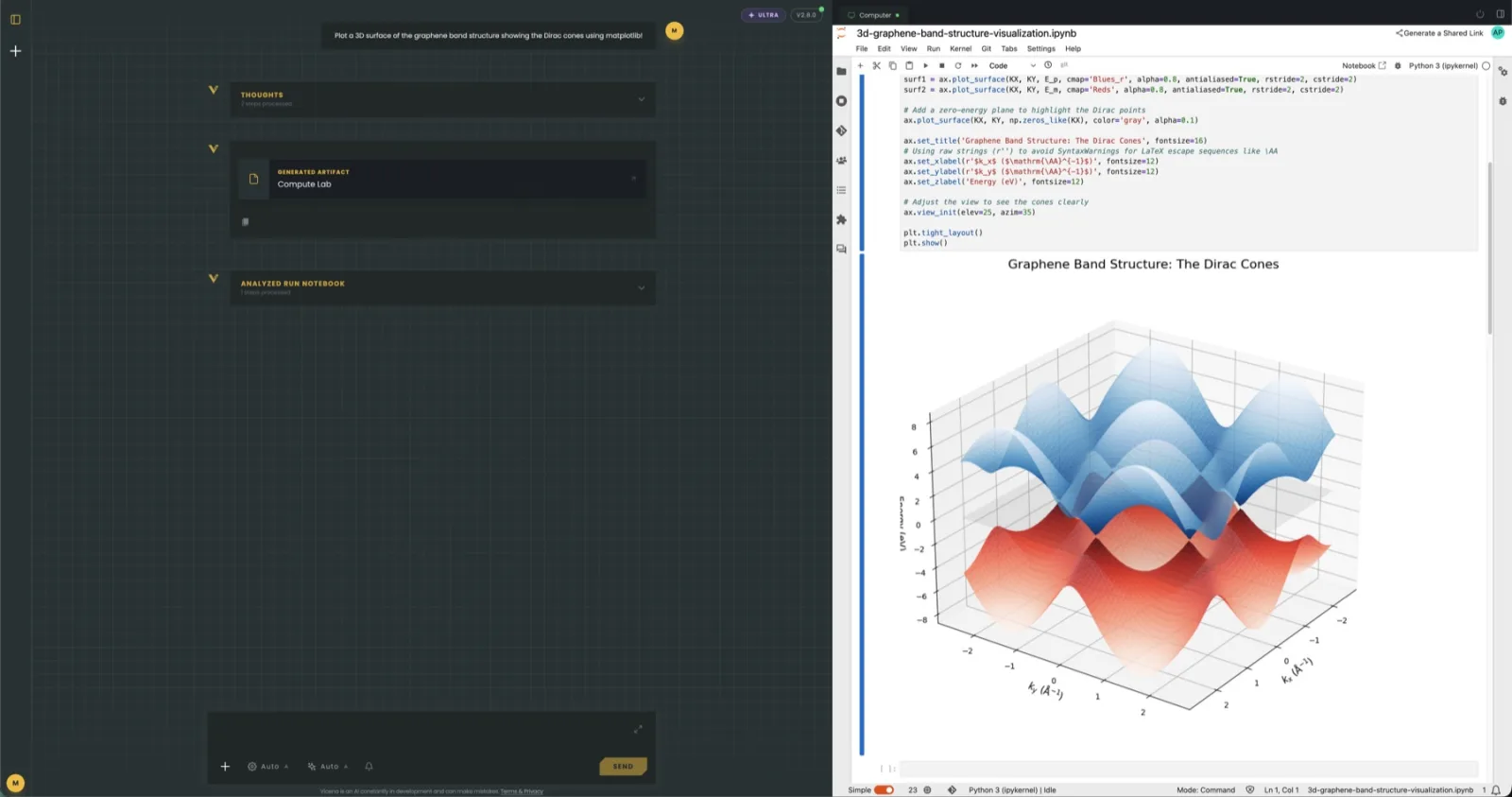
Run digital experiments.
Vicena operates scientific software, writes and runs notebook code, and keeps inputs, methods and output files together. Compare conditions and inspect the results.
Explore the Computer ↗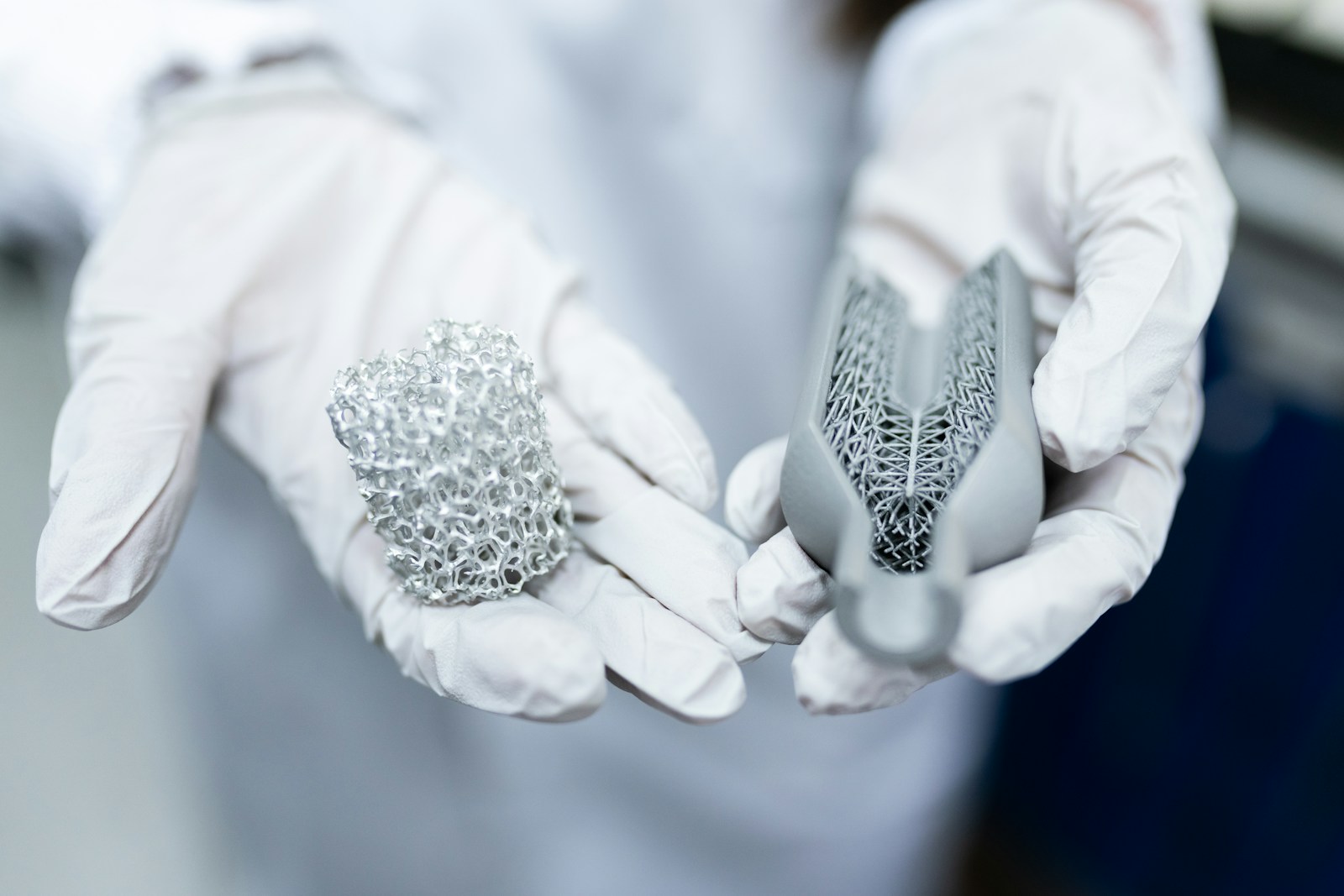
Get lab tests done through Vicena.
Submit your test brief through Vicena. Our team coordinates suitable laboratories, sample requirements and returned results. The laboratory performs the tests after you approve the scope and quote.
Discuss a laboratory request ↗FOR AI LABS AND MODEL TEAMS
Design the program around the model objective.
Train on connected research steps.
Define the scientific tasks your model should learn. Capture an agreed sequence of questions, methods, observations, corrections and recorded next-step decisions across simulated or physical experiments.
Scope your first experiment →- Dataset purpose
- Training / fine-tuning
- Selection plan
- Agreed tasks and experiment sequences
- Observation
- Agreed outputs, units and conditions
- Quality criteria
- Validation checks, controls and invalid-run rules
- Data release
- Versioned research records after quality review
The model team retains control of training and model updates.
SUPPORTED SCIENTIFIC WORKFLOWS
Different questions.
A shared scientific process.
Drug discovery is one application. Explore existing digital workflows in molecular modeling, materials, optics and electronics. Each enterprise program is scoped against the tools and laboratory capabilities it needs.
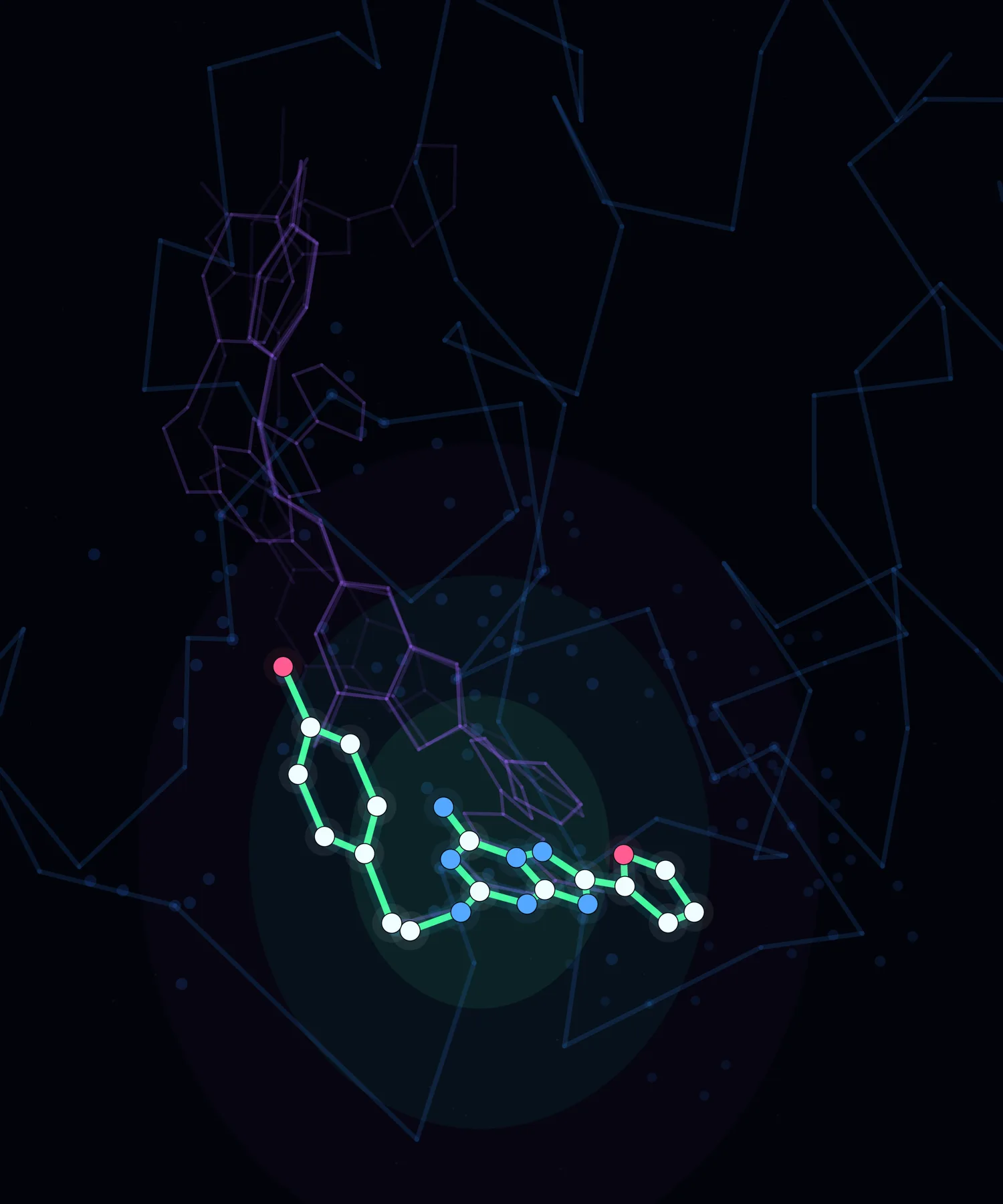
Drug discovery
Compare molecular candidates with docking and molecular simulation. Scope physical measurements with a suitable laboratory.
Molecular modeling example
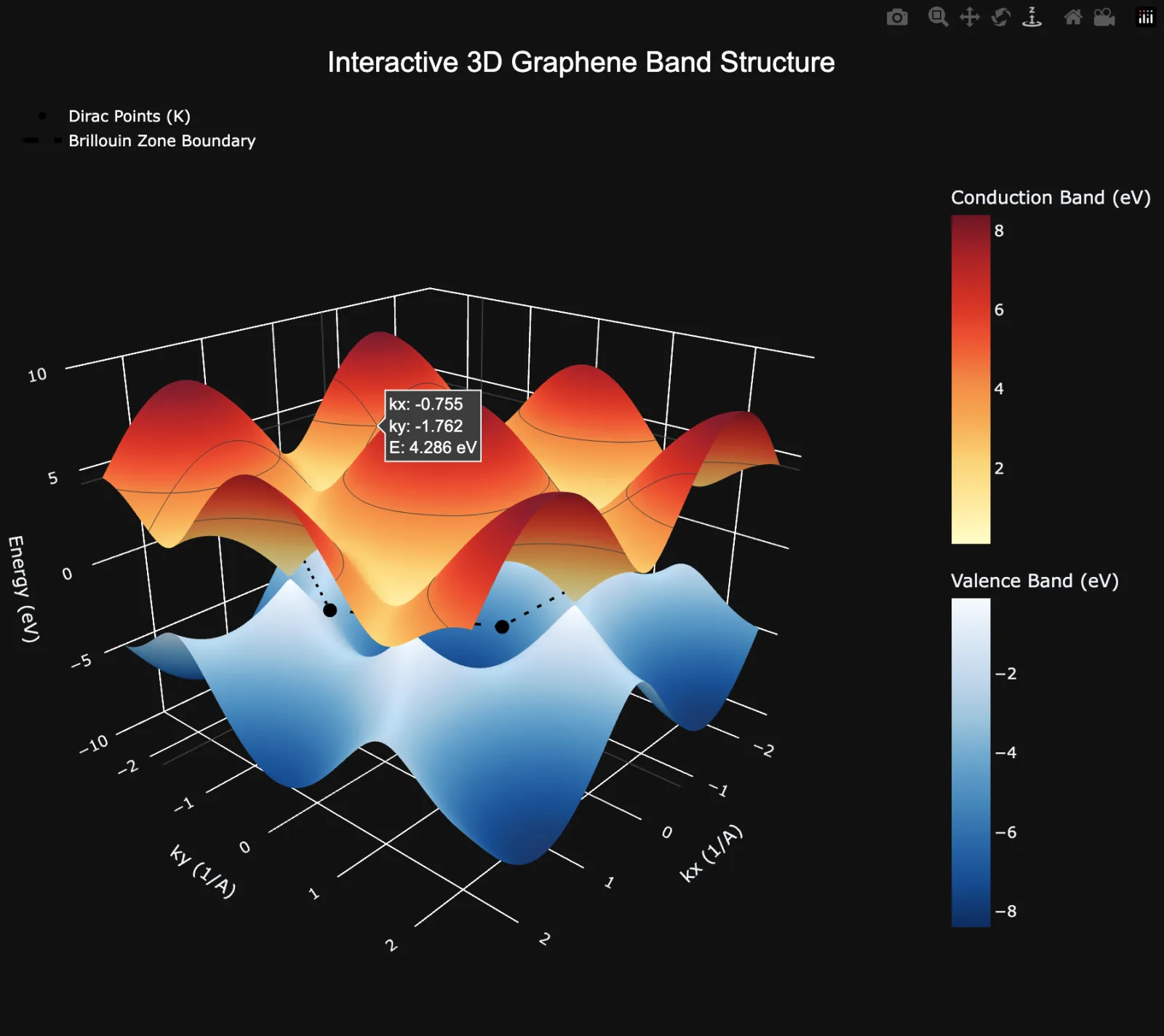
Materials modeling
Explore electronic structure and compare model assumptions in a notebook. Define characterization needs for physical samples.
Electronic-structure notebook example
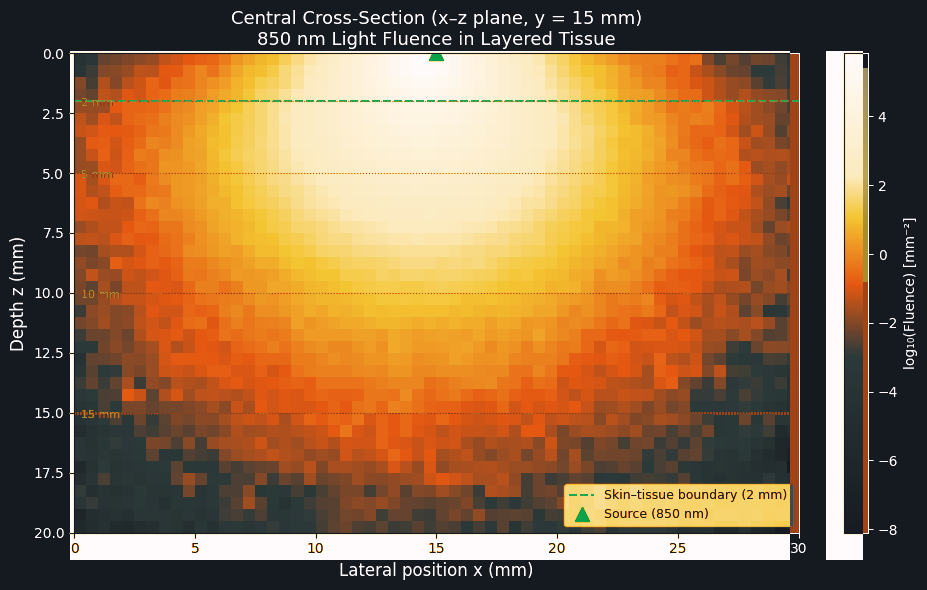
Optics and sensing
Vary light sources and material properties, run photon transport and inspect the spatial result.
MCX simulation output
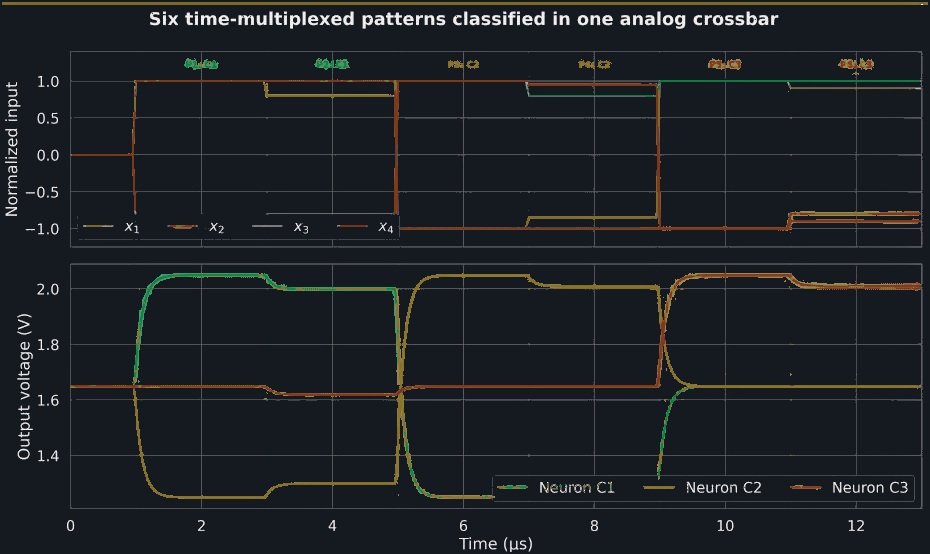
Circuits and devices
Test circuit behavior across inputs and conditions. Compare waveforms and numerical checks with the design requirements.
ngspice transient output
QUESTION → EXPERIMENT → EVIDENCE → NEXT EXPERIMENT
Keep every experiment connected to the research.
Agree on the program before execution. Scientific methods, feasibility, budget, data rights and approval checkpoints are defined with your team.
- 01
Define the question
Your team sets the model objective, hypothesis and success criteria. Together we define what to vary, what to observe and what evidence would answer the question.
- 02
Design the experiments
Choose supported simulation tools or suitable laboratories. Agree on methods, controls, compute or sample requirements, budget and approval checkpoints.
- 03
Run and collect evidence
Run digital experiments in Vicena. For physical work, the Vicena team coordinates the approved laboratory request; laboratories perform the experiment. Preserve inputs, outputs and quality records.
- 04
Decide the next experiment
Review the evidence against the objective. Your team or experimental design agent chooses the next test and keeps the reasoning connected to the research record.
Enterprise programs are scoped engagements. Physical work depends on laboratory-confirmed feasibility, availability and terms, followed by your approval.
PRESERVE THE SCIENTIFIC PROCESS
Research sequences your team can inspect and use.
Preserve how each experiment follows from the previous one. Keep task inputs, methods, observations and explicitly recorded decisions linked, so your team can trace how the work reached its result.
Retain negative findings alongside positive results. Distinguish a valid scientific outcome from an invalid run or missing observation.
Illustrative research-record specification · Contents agreed with your team
PLAN AN EXPERIMENT PROGRAM
What scientific work should your model learn?
Start with a task your model should learn to carry out or be evaluated on. We will scope the experiments, the research sequence to preserve and the records your team needs.
What we would agree together
- Model objective, research domain and success criteria
- Simulation or laboratory methods and validation requirements
- Experiment volume, resources, budget and turnaround
- Data formats, usage rights and decision checkpoints
EXPERIMENTAL DATA CAMPAIGN